


Faculty
教員紹介
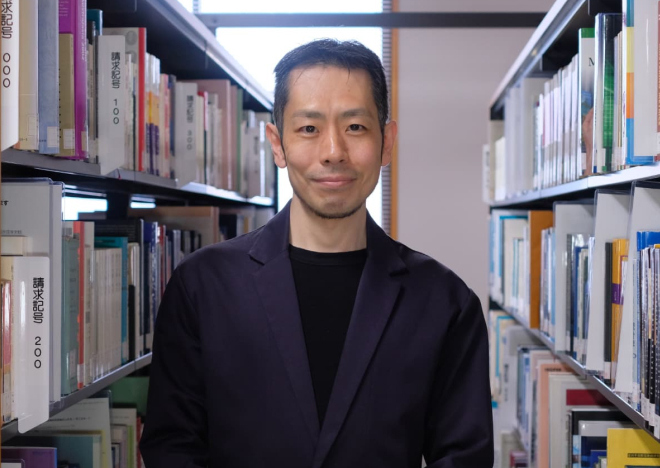
Ishise Hirokazu
Macroeconomics, International Economics
Professor
Degree: Ph.D. in Economics (Boston University)

Field of Research
Macroeconomics, International Economics
Research Topics
Theoretical and Empirical Analysis of Business Cycles, Trade, Monetary Policy, and Economic Development
Overview of Research
What drives the changes in aggregate variables such as GDP, consumption, inflation rate, exports and imports, and exchange rates? Some branches of economics, macroeconomics and international economics examine the determinants of aggregate variables based on the micro behavior of economic agents (e.g., households, firms, governments, banks). I have been working on theoretical and empirical studies addressing the nexus between macroeconomics (business cycles and economic growth) and international economics (trade and international finance).
One particular study examines the heterogeneous response to changes in transportation costs according to the vintage of capital goods. In addition to existing research that examines productivity-driven exporting status, I provide new empirical predictions about vintage and exporting status. New machines are more productive, and hence more likely to be in operation. Furthermore, among new machines, top-tier machines are used for exporting. Old machines are not only few due to retirement but also less productive due to embodied vintage technology.
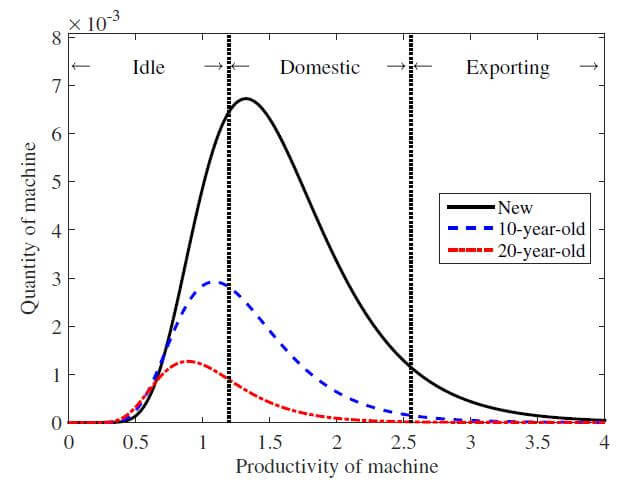
Figure 6. Ishise (2016), “Capital heterogeneity as a source of comparative advantage: Putty-clay technology in a Ricardian model,” Journal of International Economics, 99: 223–236.
In recent years, I have undertaken theoretical and empirical research on the interaction of the nominal side (inflation, nominal exchange rate) and international trade. For example, I demonstrate that a country with low inflation has a comparative advantage in an industry that has sticky input prices.
Message to Students
An economic model is a powerful tool to forecast potential effects of a policy intervention. However, a slightly different model can present exactly opposite results. We need to examine the assumptions of the model carefully, whether the assumptions are plausible, what happens if one of the assumptions is modified, and what kind of data we can use to validate the assumptions.
Similarly, using statistical methods is a powerful tool to check the effects of a past policy intervention. However, a similar statistical model or data sometimes reveals exactly opposite results. We need to examine the assumptions of the statistical method carefully, as well as what kind of logic (model) validates the statistical methods.
In actual policy discussions, even if they refer to results of theoretical or statistical analysis, people tend to ignore the assumptions behind the results of the analysis. Over the course of your study at OSIPP, I expect students to make it a practice to look at assumptions and methodologies, and not just results.